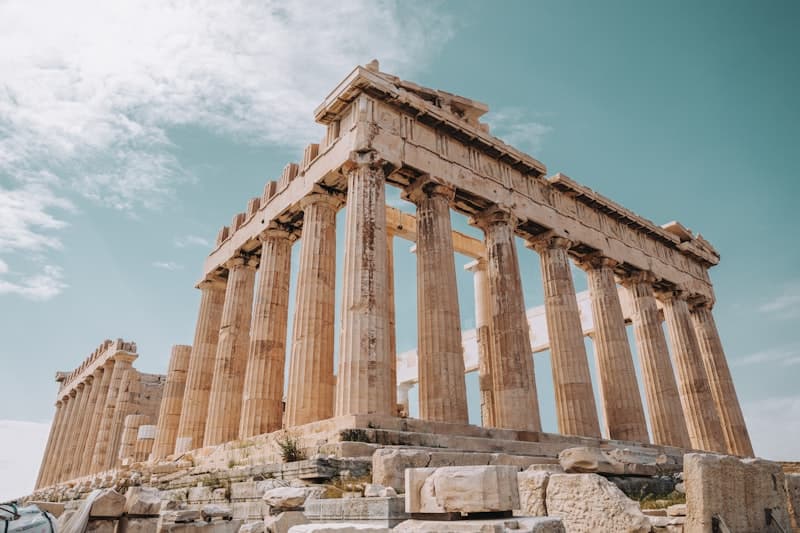
The French Colonial Empire
France's second colonial empire at its peak in 1938 covered 12.3 million square kilometres — spreading the French language, legal code, and culture across West Africa, Southeast Asia, the Caribbean, and the Pacific.

Empires have shaped human geography, culture, language, and law across every continent. These are the empires that dominated the largest territories, lasted the longest, or had the most profound and lasting impact on world civilisation.

France's second colonial empire at its peak in 1938 covered 12.3 million square kilometres — spreading the French language, legal code, and culture across West Africa, Southeast Asia, the Caribbean, and the Pacific.

At its peak in 1920, the British Empire covered 24% of the world's land surface and governed 412 million people. Its legacy — the English language, common law, parliamentary democracy, and the Commonwealth — remains globally pervasive.

While not a formal empire, American cultural, economic, and military dominance from 1945 onward spread democracy, the English language, Hollywood, fast food, and the internet across every nation on earth in a new form of soft imperialism.

Built in just 13 years, Alexander's Macedonian Empire stretched from Greece to northwestern India — spreading Hellenistic culture, founding Alexandria, and creating a template of ambitious individual conquest that inspired Caesar and Napoleon.

The eastern continuation of Rome lasted 1,000 years after the western empire fell — preserving classical knowledge, spreading Orthodox Christianity to Russia and Eastern Europe, and maintaining the most sophisticated urban culture in medieval Europe.

At its height under Trajan in 117 CE, Rome governed 5 million square kilometres and 70 million people — spreading Latin, Roman law, engineering, and Christianity across Europe in a legacy that still defines Western civilisation.

Ruling the Indian subcontinent from 1526 to 1857, the Mughals produced the Taj Mahal, unified India's diverse populations under sophisticated administration, and established Persian as the language of art and governance.

Under Darius I, the Persian Empire stretched from the Balkans to the Indus Valley — governing through a sophisticated bureaucracy and postal system, and famously tolerating the religious practices of all subject peoples.

The first true global empire — spanning the Americas, the Philippines, and parts of Africa and Europe, Spain's empire spread the Spanish language across two continents and produced the first silver-based global economy.

China's Han Dynasty governed over 60 million people and established the Silk Road trade network, the civil service examination, Confucian governance philosophy, and the cultural identity that Chinese people still call Hanzu.

Lasting 600 years from 1299 to 1923, the Ottoman Empire bridged three continents, preserved and spread Islamic scholarship, and produced an administrative model of religious tolerance that was ahead of its European contemporaries.

The largest contiguous land empire in history at 24 million square kilometres under Genghis Khan and his successors — connecting Europe, the Middle East, Persia, China, and Central Asia in one political entity.
“The French Colonial Empire”
Currently ranked #1. Where will it be in 7 days?
History & CultureA single battle can redirect the course of civilisation — determining which language a continent speaks, which religion it follows, or whether a nation exists at all. These are the battles whose outcomes shaped the world we live in today.
History & CultureHistory is shaped by individuals who channelled the forces of their era into lasting change. These are the leaders — conquerors, reformers, visionaries, and liberators — whose decisions and characters most profoundly altered the course of civilisation.
History & CultureHumanity's capacity for monumental achievement across every era — from the Pyramids to the International Space Station. These are the wonders of engineering, architecture, and human ambition that define what civilisation is capable of.